


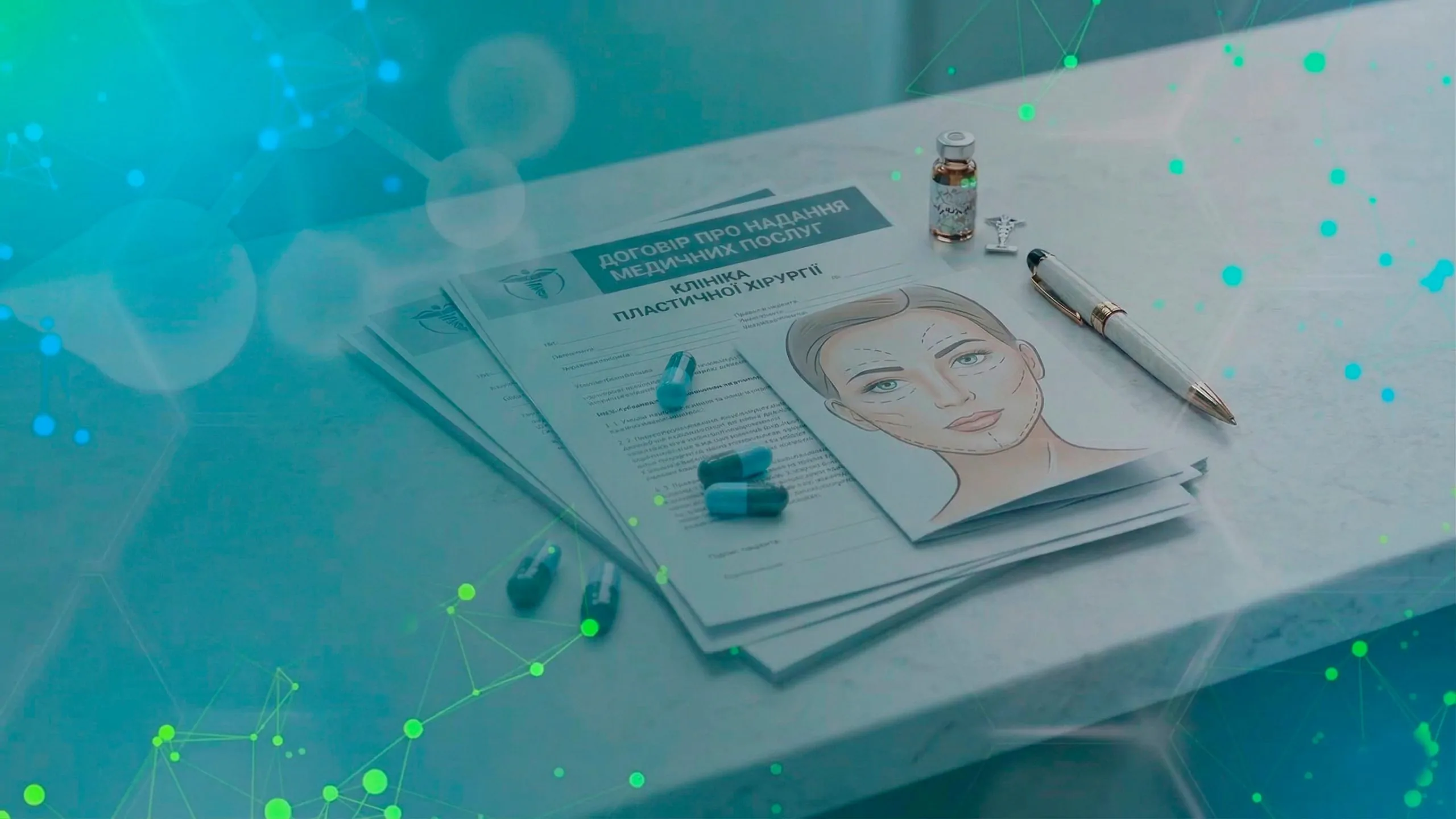
Contracts in Plastic Surgery Clinics: How to Protect the Clinic, the Surgeon, and the Patient
A practical guide by law firm Dextralaw
Why a Contract Is the Foundation of a Plastic Surgery Clinic
Plastic surgery is one of the most legally vulnerable fields of medicine. Unlike emergency surgery, where the patient does not choose the doctor, in plastic surgery a person consciously seeks a change in appearance — and has specific expectations. When the result does not match expectations, conflict is inevitable.
At the core of legal relations in the field of plastic surgery lie the most fundamental human values — life and health. The object of the contract is the patient’s health, and its subject is a medical service that cannot guarantee a hundred percent result.
“In plastic surgery, a contract is not a formality but a shield. For the clinic, it protects against unfounded claims, threats and damage to business reputation; for the patient, it guarantees transparency, records the patient’s expectations and the outcome of services, the right to compensation in the event of a conflict. A properly drafted document package prevents 90% of court disputes.” — Medical Law Attorney, Dextralaw
⚖ Art. 901 CCU: Under a service agreement, the provider undertakes to provide the service, and the customer — to pay for it.
⚖ Art. 906 CCU: Losses from improper performance of services are subject to compensation by the provider if they are at fault.
Standard Contracts for Medical Facilities
Every clinic providing paid medical services is required to have a package of contracts that comply with current legislation. Below is a list of mandatory documents:
| Contract | Purpose | Legal Basis |
| Medical Services Agreement | The main document defining the subject, scope, timeframes, and cost of services. Concluded between the clinic and the patient. | Art. 901–907 CCU, Law of Ukraine “Fundamentals of Healthcare Legislation” |
| Informed Voluntary Consent | Confirmation that the patient received full information about the diagnosis, treatment methods, risks, and alternatives. | Art. 39, 43 Law of Ukraine “Fundamentals of Healthcare Legislation”, Form No. 003-6/o |
| Consent for Personal Data Processing | Written consent of the patient for the collection, storage, and processing of their medical and personal data. | Law of Ukraine “On Personal Data Protection” No. 2297-VI, Art. 6, 7, 11 |
| Agreement with Medical Staff | Employment or civil law contract with surgeons, anesthesiologists, nurses. Defines duties, liability, confidentiality. | Labour Code of Ukraine, Art. 21–49; CCU, Ch. 63 |
| Supplier Agreement | Supply of medical devices, implants, pharmaceuticals, consumables. Defines quality, certification, liability. | CCU, Law of Ukraine “On Medicinal Products”, Law of Ukraine “On Medical Devices” |
| Premises/Equipment Lease Agreement | Lease of operating rooms, wards, specialised equipment for surgical procedures. | CCU, Ch. 58–60; CCU |
| Medical Insurance Agreement | Insurance of professional liability of the surgeon and clinic against claims. | Law of Ukraine “On Insurance”, CCU Ch. 67 |
Specific Contracts for Plastic Surgery
In addition to standard medical contracts, plastic surgery clinics require additional documents that account for the specifics of aesthetic procedures:
| Specific Contract | What It Records | Why It Is Critically Important |
| Appendix: Expected Outcome and Limitations | “Before” photo protocol, 3D modelling, description of the patient’s desired outcome and the surgeon’s realistic prognosis. | Plastic surgery does not guarantee a 100% result. This appendix is the primary defence against court claims. |
| Extended Informed Consent with Risk Description | Detailed list of complications: asymmetry, keloid scars, capsular contracture, loss of sensation, repeat surgeries. | The standard Form No. 003-6/o is insufficient for plastic surgery. Extended consent specific to each operation is required. |
| Consent for Photo/Video Recording | Permission to photograph “before/after”, use in portfolio, training, marketing. | Without this consent, any use of patient photos constitutes a violation of the Law “On Personal Data Protection”. |
| Revision Surgery Agreement | Conditions for repeat intervention: timeframes, cost, liability of the parties. | Clearly regulates the clinic’s financial obligations in case of an unsatisfactory result. |
| Preoperative Patient Checklist | Confirmation of completed examinations, tests, abstinence from tobacco/alcohol, familiarisation with recommendations. | Records the patient’s compliance with preoperative requirements — protects the clinic from claims. |
| Non-Disclosure Agreement (NDA) | Mutual obligations regarding non-disclosure of information: medical data, the fact of surgery, personnel. | Especially relevant for VIP patients and public figures. |
“The standard informed consent Form No. 003-6/o is the bare minimum. For rhinoplasty, mammoplasty, and blepharoplasty, separate extended consents with a list of specific risks are required. This is not bureaucracy — it is an evidentiary basis in court.” — Medical Law Attorney, Dextralaw
Informed Consent: The Key Document
Article 43 of the Law “Fundamentals of Healthcare Legislation of Ukraine” directly requires: for the application of any methods of diagnosis, prevention, and treatment, the consent of the informed patient is required. The patient must receive full and accurate information about:
- the state of their health, including diagnosis and prognosis
- proposed treatment methods and their alternatives
- possible risks to life and health
- expected results and their limitations
- the right to refuse medical intervention at any stage
⚖ Art. 39 Law of Ukraine “Fundamentals of Healthcare Legislation”: The doctor is obliged to provide the patient with accurate and complete information about the state of their health.
⚖ Art. 43 Law of Ukraine “Fundamentals of Healthcare Legislation”: Patient consent is required for the application of diagnostic, preventive, and treatment methods.
What Extended Consent in Plastic Surgery Should Include
- Full description of the operation: name, scope, duration, type of anaesthesia
- List of specific risks (keloids, asymmetry, necrosis, capsular contracture — for mammoplasty)
- Clear statement: surgery does not guarantee a hundred percent result
- Pre- and postoperative period recommendations
- Conditions for repeat corrections
- Patient’s signature, date, doctor’s signature
Personal Data Protection: A Mandatory Component
A plastic surgery clinic processes a particularly sensitive category of personal data: medical records, body photographs, information about the fact of surgery. The Law of Ukraine “On Personal Data Protection” (No. 2297-VI) classifies health data as personal data with enhanced processing requirements (Art. 7).
What the Clinic Is Required to Do
- Obtain written consent from the patient for the processing of their personal data, specifying the purpose and scope
- Appoint a person responsible for personal data protection (Art. 24 of Law No. 2297-VI)
- Ensure storage of medical data with restricted access
- Establish clear procedures for data destruction upon completion of the processing purpose
- Separately obtain consent for the use of “before/after” photos in marketing
Liability: a fine from UAH 1,700 to UAH 8,500 for a first offence, from UAH 17,000 to UAH 34,000 for a repeat offence (Art. 188-39 of the Code of Administrative Offences). In the case of disclosure of medical confidentiality — up to criminal liability under Art. 145 of the Criminal Code of Ukraine.
⚖ Art. 40 Law of Ukraine “Fundamentals of Healthcare Legislation”: Medical professionals are obliged to maintain medical confidentiality.
⚖ Art. 7 Law of Ukraine “On Personal Data Protection”: Processing of health data without the person’s consent is prohibited, except in cases specified by law.
“A plastic surgery clinic works with body photographs, medical diagnoses, data about surgeries — these are personal data with the highest level of protection. A single leak of a ‘before/after’ photo — and the clinic faces not only a fine but a reputational catastrophe.” — Personal Data Protection Lawyer, Dextralaw
SOPs: Standard Operating Procedures as a Legal Shield
SOPs (Standard Operating Procedures) are formally documented instructions with step-by-step actions that define how procedures are performed in a clinic. In the context of plastic surgery, SOPs are not merely an internal regulation but legal proof of a proper level of service delivery.
Critical SOPs for a Plastic Surgery Clinic
- Preoperative Preparation SOP: examinations, tests, questionnaires, photo documentation, contraindication checks
- Surgical Process SOP: sterility, equipment control, maintaining the surgical protocol
- Anaesthesia SOP: selection of anaesthesia type, patient condition monitoring
- Postoperative Monitoring SOP: frequency of examinations, discharge criteria, patient instructions
- Personal Data Processing SOP: who has access, how photos are stored, destruction procedures
- Complication Response SOP: action algorithm for bleeding, allergic reaction, cardiac arrest
- Complaint Handling SOP: registration, review, mediation, legal escalation
The existence of SOPs is an argument in court. If a clinic proves it acted in accordance with approved standards, the chances of a successful defence increase significantly.
Key Legislative Acts
A complete list of regulatory acts governing the activities of plastic surgery clinics:
- Law of Ukraine “Fundamentals of Healthcare Legislation” (No. 2801-XII of 19.11.1992) — Art. 39 (informing), Art. 40 (medical confidentiality), Art. 42 (conditions of intervention), Art. 43 (informed consent)
- Civil Code of Ukraine (No. 435-IV of 16.01.2003) — Ch. 63, Art. 901–907 (service agreement), Art. 1166–1167 (compensation for damages)
- Law of Ukraine “On Personal Data Protection” (No. 2297-VI of 01.06.2010) — Art. 6 (general requirements), Art. 7 (special requirements for medical data), Art. 24 (ensuring protection)
- Law of Ukraine “On Consumer Rights Protection” (No. 1023-XII of 12.05.1991) — Art. 15 (right to information), Art. 10 (rights upon breach of contract terms)
- MoH Order No. 210 of 02.04.2009 — “On the improvement of plastic and reconstructive surgical care”
- MoH Order No. 297 of 02.04.2010 — standards and clinical protocols for surgical care delivery
- MoH Order No. 693 of 06.08.2013 — organisation of clinical expert assessment of medical care quality
- Criminal Code of Ukraine — Art. 131 (improper performance of professional duties), Art. 140 (improper performance of duties by a medical worker), Art. 145 (unlawful disclosure of medical confidentiality)
Consequences of Missing Contracts
The absence or improper execution of contracts leads to specific legal consequences:
- Financial: compensation for material and moral damages under Art. 906 CCU, Art. 22 Law of Ukraine “On Consumer Rights Protection”
- Administrative: fines for violations of personal data processing (UAH 1,700–34,000)
- Criminal: liability under Art. 140 CCU (improper performance of duties by a medical worker) and Art. 145 CCU (disclosure of medical confidentiality)
- Licensing: revocation of the medical practice licence by MoH decision
- Reputational: negative reviews, media publications, loss of patient trust
Case 1. Mammoplasty Without Extended Informed Consent
⚠ Situation: A patient came to the clinic for breast augmentation. She signed the standard Form No. 003-6/o. After 8 months, grade III capsular contracture developed — the implant deformed, pain appeared. The patient filed a lawsuit for UAH 850,000: cost of repeat surgery + moral damages.
⚖ Legal basis: The court found that the standard consent form contained no mention of capsular contracture as a specific risk of mammoplasty. The patient was not informed in accordance with the requirements of
Art. 39 and Art. 43 Law of Ukraine “Fundamentals of Healthcare Legislation”. Liability under Art. 906 CCU — compensation for losses in the presence of the provider’s fault.
❌ Result: The clinic was ordered to reimburse the full cost of the repeat surgery (UAH 320,000) + moral damages (UAH 180,000) + court costs. Had extended informed consent with a list of specific mammoplasty risks been signed — the claim would have been dismissed.
Case 2. “Before/After” Photos on Instagram Without Patient Consent
⚠ Situation: The clinic’s SMM manager published photographs of rhinoplasty results on the clinic’s Instagram page. The patient’s face was partially masked, but acquaintances recognised her. The patient had not signed a separate consent for the use of photos in marketing. She filed a complaint with the Ombudsman and a lawsuit in court.
⚖ Legal basis: Violation of Art. 6 and Art. 7 Law of Ukraine “On Personal Data Protection” — processing of personal data (body photos are biometric data) without the subject’s consent. Violation of Art. 40 Law of Ukraine “Fundamentals” — disclosure of medical confidentiality (the very fact of seeking plastic surgery).
❌ Result: Fine under Art. 188-39 of the Code of Administrative Offences (up to UAH 8,500 per responsible person). Moral damages claim — the court awarded UAH 150,000. Ombudsman’s directives. Reputational blow: media publications, patient outflow. Solution: a separate consent form for photo/video recording specifying the channels of use.
Case 3. Rhinoplasty: Expectations vs. Reality Without a Photo Protocol
⚠ Situation: A patient came for rhinoplasty. During the consultation, the surgeon discussed the desired nose shape verbally, without a photo protocol or 3D modelling. The surgery was technically successful, but the patient claimed the result “did not match what the doctor promised.” He filed a lawsuit for UAH 500,000 demanding payment for a repeat surgery at another clinic and compensation for moral damages.
⚖ Legal basis: The claim is based on Art. 15 Law of Ukraine “On Consumer Rights Protection” (right to accurate information) and Art. 901, 906 CCU. The clinic cannot prove that the patient was properly informed about the realistic prognosis — there is no documented “before” photo protocol or signed appendix describing the expected outcome.
❌ Result: The court partially granted the claim: moral damages compensation of UAH 120,000 + court costs. Had the clinic had a signed photo protocol with recorded expectations and the surgeon’s realistic prognosis — the claim would have been dismissed entirely.
Case 4. Complications After Liposuction: Absence of SOPs
⚠ Situation: During abdominal liposuction, the patient became unwell — a sharp drop in blood pressure, an allergic reaction to the anaesthetic. Resuscitation equipment was in the operating room, but the nurse did not know the action algorithm: medications were in another room, the emergency protocol had not been approved. The patient was saved but spent 3 days in intensive care at another hospital.
⚖ Legal basis: Violation of licensing conditions for medical practice. Grounds for criminal proceedings under Art. 140 CCU (improper performance of professional duties by a medical worker resulting in severe consequences). Civil claim for reimbursement of resuscitation costs, treatment, and lost earnings under Art. 1166–1168 CCU.
❌ Result: Criminal proceedings against the surgeon and anaesthesiologist. Civil claim for UAH 1,200,000. MoH inspection — temporary licence suspension. Had the clinic had an approved SOP for complication response with a clear algorithm, role distribution, and medication storage location — the situation would have been under control, and the legal defence — significantly stronger.
Case 5. Absence of a Revision Surgery Agreement
⚠ Situation: A patient had blepharoplasty. The result was satisfactory, but after 6 months a slight asymmetry appeared — a natural consequence of healing. The surgeon verbally promised during the consultation “if something is wrong — we’ll fix it for free.” When the patient came for the correction, the clinic issued a bill for UAH 85,000. The patient filed a lawsuit citing the doctor’s verbal promise.
⚖ Legal basis: A doctor’s verbal promise may be recognised by the court as part of contractual relations under Art. 901 CCU (a contract may be verbal). Art. 18 Law of Ukraine “On Consumer Rights Protection” — unclear contract terms are interpreted in favour of the consumer.
❌ Result: The court ordered the clinic to perform the correction free of charge + UAH 50,000 in moral damages. Had a signed revision surgery agreement with clear terms (timeframes, grounds, cost) existed — the clinic would have had a legal position and an evidentiary basis.
“Each of these cases is a real scenario that we encounter in practice. Clinics lose hundreds of thousands of hryvnias in court rulings, while the cost of a properly drafted document package is tens of times less. We have seen dozens of cases where clinics lost lawsuits solely because they lacked a signed extended informed consent. A proper contract is an investment, not an expense.” — Senior Partner, Dextralaw
Protect Your Clinic Today
Law firm Dextralaw specialises in medical law and offers plastic surgery clinics:
- Audit of existing contractual base and internal documents
- Development of a complete contract package for your clinic
- Creation of extended informed consents for each type of surgery
- Development of SOPs and internal regulations
- Implementation of a personal data protection system
- Legal support and representation in courts
- Defence against patient claims and MoH inspections
Contact us for a free consultation: